


SUSTAINABILITY
At Wine Country Lavender, sustainability isn’t just a principle — it’s the foundation of everything we do. When we began planning in 2020, the soil on our property was depleted and lifeless. While lavender does not need particularly fertile soil, it still needs soil that drains well and does not clog up when wet, or goes rock hard when dry - which was the case with our heavy clay-based soil in our fields. Since then, we've worked hard to restore its health through regenerative farming practices.
Through regenerative farming and committing to hand-weeding and mulching — we’ve brought new life and fertility back to the land. We intentionally avoid synthetic chemicals and instead choose organic methods that protect both the soil and the wider ecosystem.
We also made a conscious decision not to use weed matting along our lavender rows so we could stay directly connected to the soil. Instead, we continue to enrich it naturally with mulch and organic matter, rejuvenated the land.

Soil regeneration
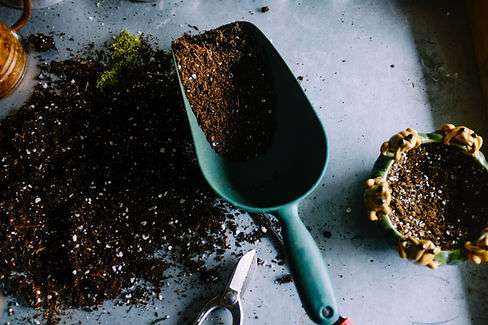
We are committed to revitalising our heavy clay-based soil by consistently adding organic matter and nurturing it with natural methods. Before planting, we carry out extensive soil preparation using a tractor to incorporate chicken manure, mushroom compost, lime, and gypsum — all of which help enrich the soil and break down its dense clay texture.
Once established, our lavender rows are carefully maintained through regular hand-weeding and mulching with hay, further improving soil structure, moisture retention, and microbial health.

Weed management
We do not use synthetic weed matting (large plastic sheets). Instead, we manage weeds through organic mulching and steam-weeding — a 100% chemical-free process.
Steam-weeding uses only hot water to kill weeds and their seeds, effectively slowing regrowth and reducing the weed cycle across seasons. These practices support soil health while protecting surrounding plants, pollinators, and wildlife.


Renewable energy
In 2024, we took a significant step toward energy sustainability by installing solar panels.
This allows us to harness renewable energy and reduce our carbon footprint while powering day-to-day operations on the farm and in our product-making process.
Rain water
Every drop counts - especially during a drought. We collect and store rainwater for irrigation and are committed to controlled water consumption across the farm.
Our approach ensures we make the most of natural rainfall while conserving this vital resource, especially during dry seasons.


Waste reduction
We’re intentional about reducing waste at every stage. Our product packaging uses predominantly glass and aluminium — both highly recyclable and reusable materials. For deliveries, we prioritise recycled cardboard and reuse packaging wherever possible. We continue to research ways to collaborate with suppliers who follow sustainable practices across our operations.
We minimise single-use plastics. In fact, we do not buy plastic bags - if we come across them we re-use them (ensuring cleanliness); wherever possible we re-use all bags, wraps, and other materials.
We've established a compost station including a worm farm and tumble bins to break down organic material and continue to improve our soil composition.